
Choosing the stove is one of the most important decisions when building a sauna. Air temperature, humidity and firewood consumption all depend on it. In this article we compare the two most popular Skamet stove types — mesh-casing and steel-casing stoves.
Steel-casing stoves
In a steel-casing stove the firebox is surrounded by a steel shell, and the stones (about 40–60 kg) sit on top of the stove. The air between the firebox and the shell heats up quickly, so the stove heats the sauna in about 30–45 minutes.
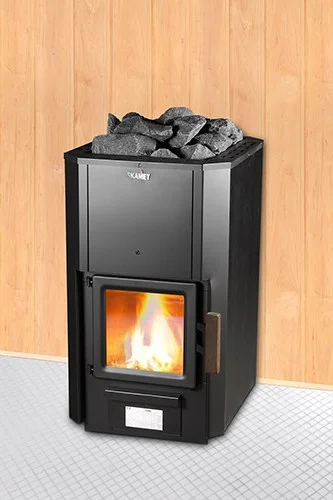
Pros:
- heats the sauna quickly
- lower firewood consumption per firing
- compact
- strong, hot steam
Things to note:
- the sauna cools down faster once you stop firing
- best suited if you spend up to two hours in the sauna
Mesh-casing stoves
A mesh-casing stove has a stone-filled mesh around the firebox — the stone mass is much larger (about 110–190 kg in S / SY models). Such a stove heats up more slowly, in about 60–90 minutes, but holds the heat much longer, and the steam is soft and even.
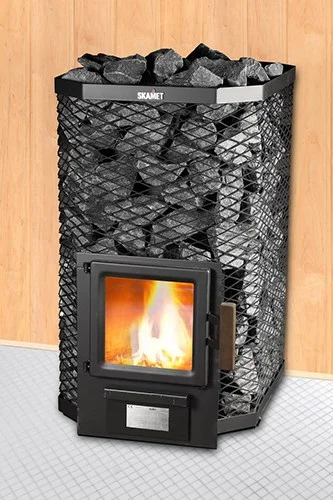
Pros:
- holds the heat for a long time
- soft, even steam
- suitable for long sessions and larger groups
- traditional “stone” look
Things to note:
- takes longer to heat up
- needs more stones, which have to be replaced over time
Which stove is better?
There is no single answer — every sauna owner has their own needs. The manufacturer recommends: if your family spends about two hours in the sauna, choose a steel-casing stove (PS, P or PT). If you bathe longer, choose a mesh-casing stove (SS, SSY, S, SY, ST or STY).
Before buying, consider the volume of the steam room, the firing method (from the steam room or from another room) and whether you need hot water. You can find more information in the article “How to choose the right sauna stove” or contact us — we will help you choose the right stove for your sauna.
 Uzticams cenu meklētājs